I fell in love with Montessori the moment I jumped into teaching a classroom full of first through third graders in 2016 at a Montessori school. Robby and I were dating and I moved to North Carolina, where he was. There was only one lower elementary teacher (1st-3rd…me) and one upper elementary teacher (4th-6th). I had never taught Montessori before and had on-the-job training for about six weeks before I becoming the official teacher. I absolutely loved the hands-on learning approach. Students are empowered to take ownership of their environment and their learning in a peaceful and calm atmosphere.
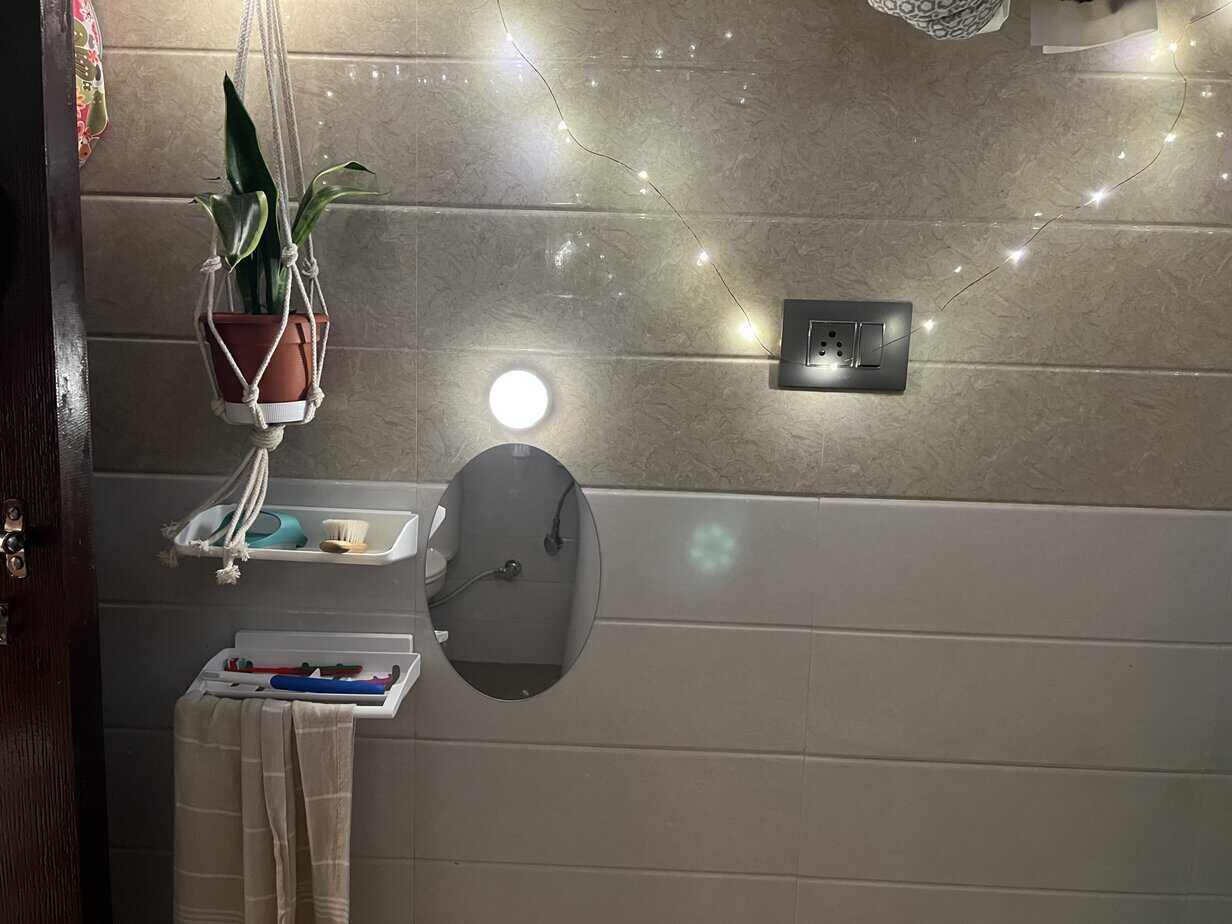
I started our Montessori home back in South Asia when Eli was a baby. Shelves and toys were at his level with only a few things out at a time. I rotated toys, invited him to help me in the kitchen once he was a toddler, and set up bathroom supplies at his level.
It takes time up front to teach skills and foster independence but it is such a help and confidence booster in the long run.
Here are 6 components to our Montessori kitchen:
1. Learning Tower
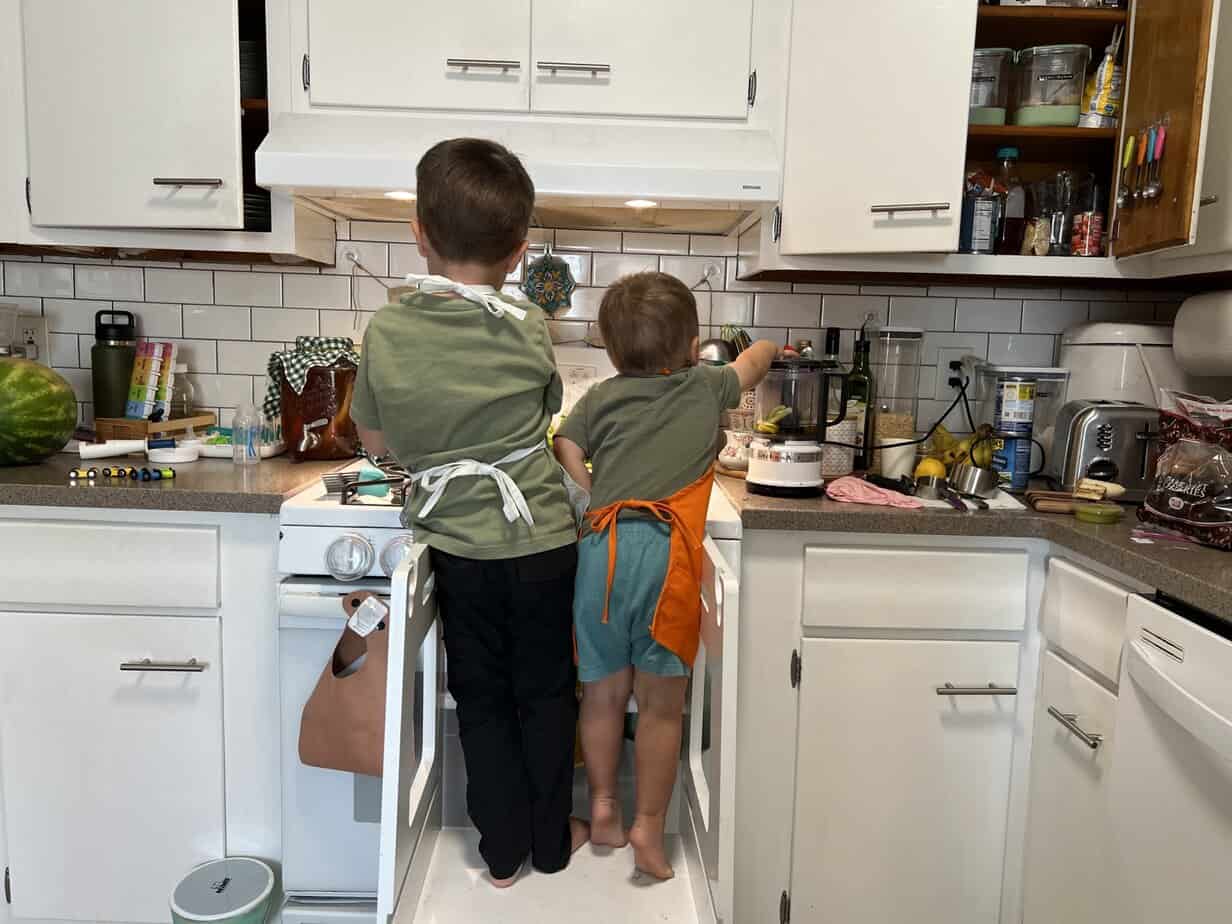
Having a learning tower has made it easy and safe for the boys to reach the counter and help me in the kitchen. When Eli was a toddler and we lived overseas, we used a large plastic tub which was quite stressful because without sides, he fell off too many times to count. Investing in an actual learning tower is worth it in my opinion.
2. Using Real Tools to Help in the Kitchen
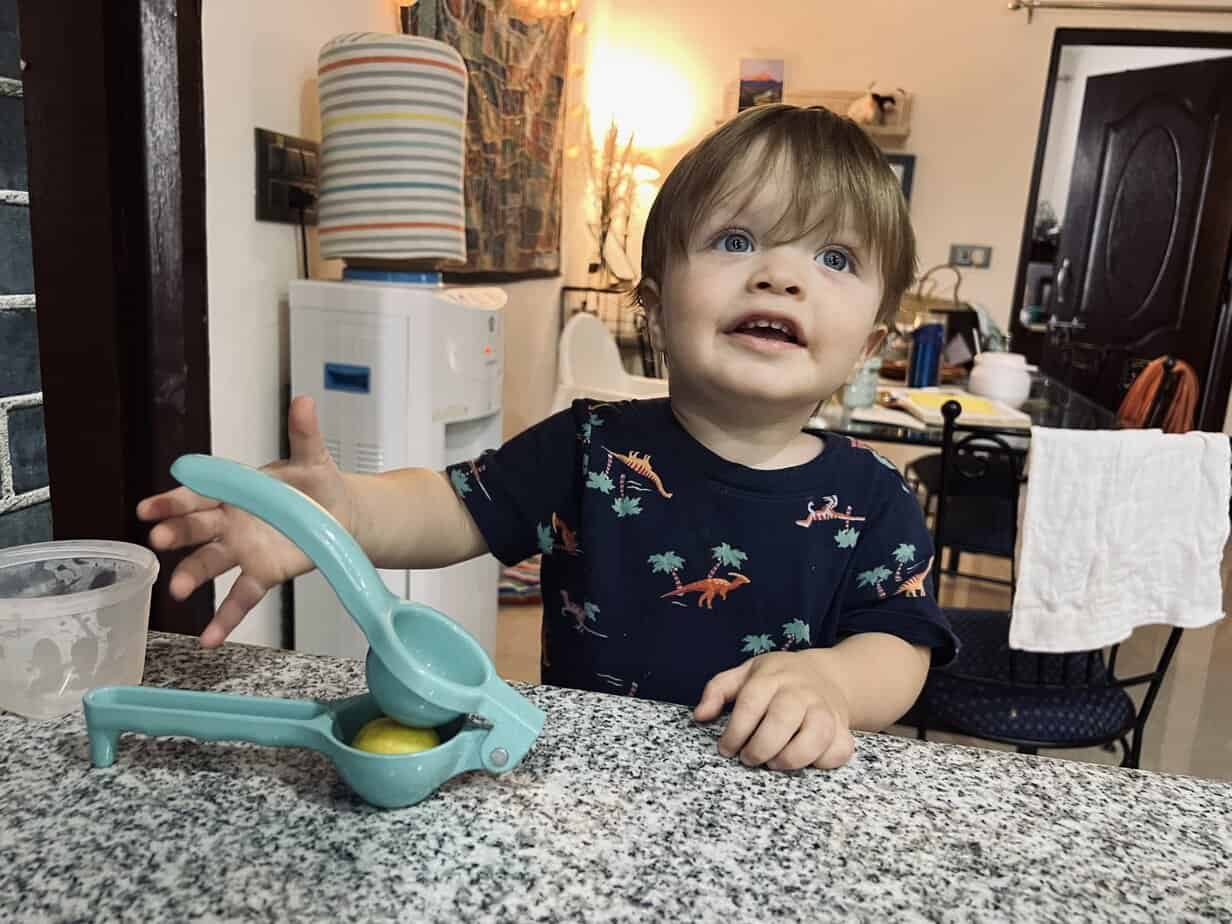
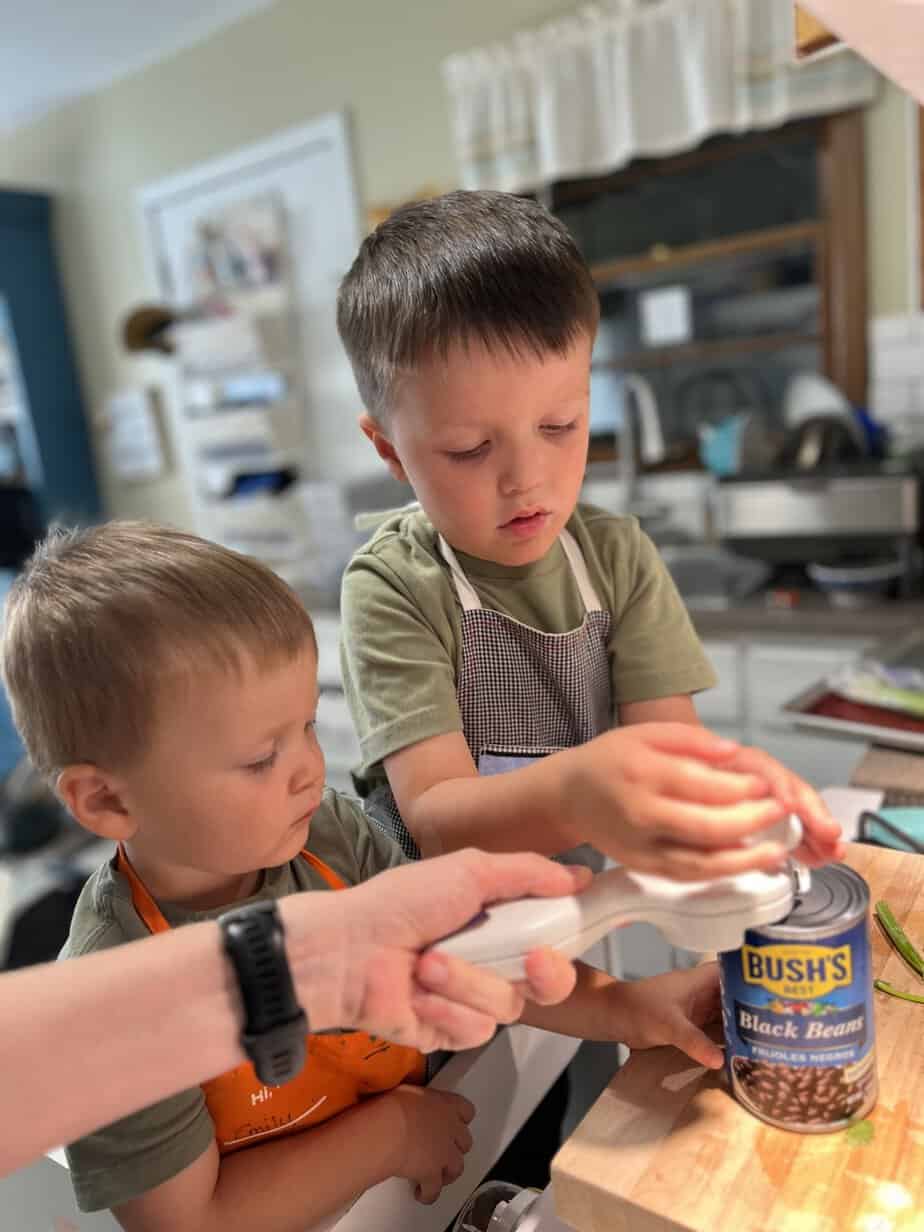
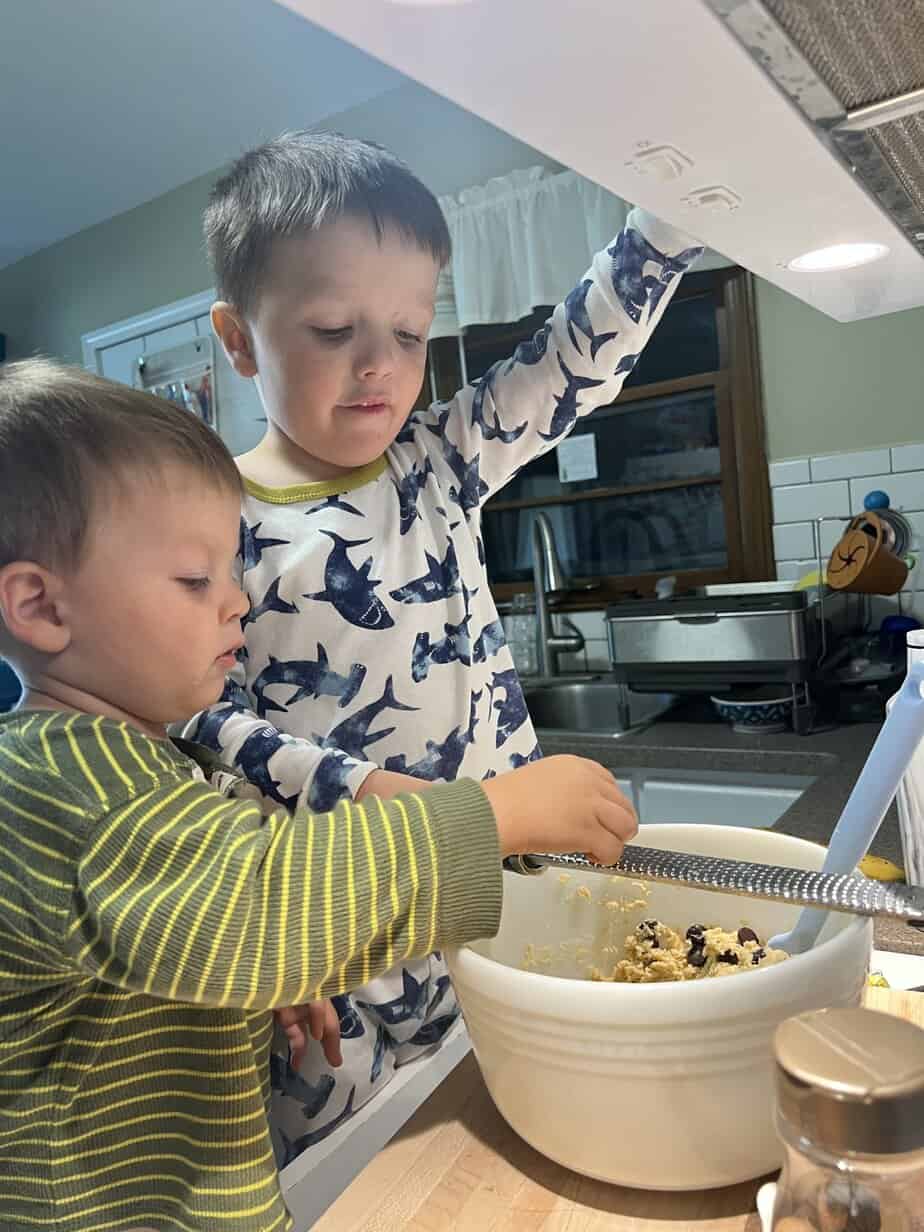
When the boys help me, I have them use as many real tools as possible. Sometimes it means kneading dough for weekly rolls, cutting bananas or watermelon, grating nutmeg (one of my favorite spices), cutting green onion or juicing an orange. They practice cutting and start with a plastic toddler knife. Eli is now able to use a metal crinkle cutter or butter knife if he chooses.
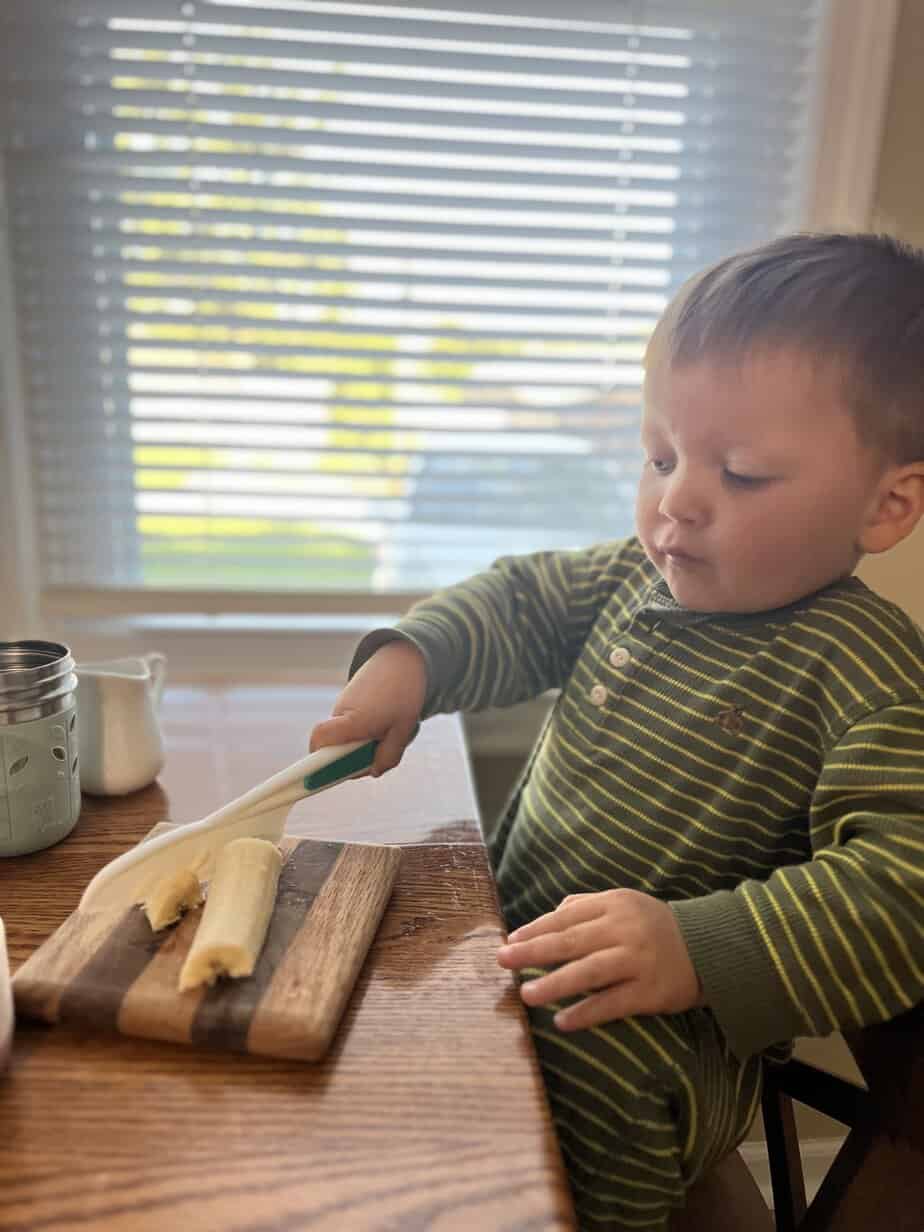
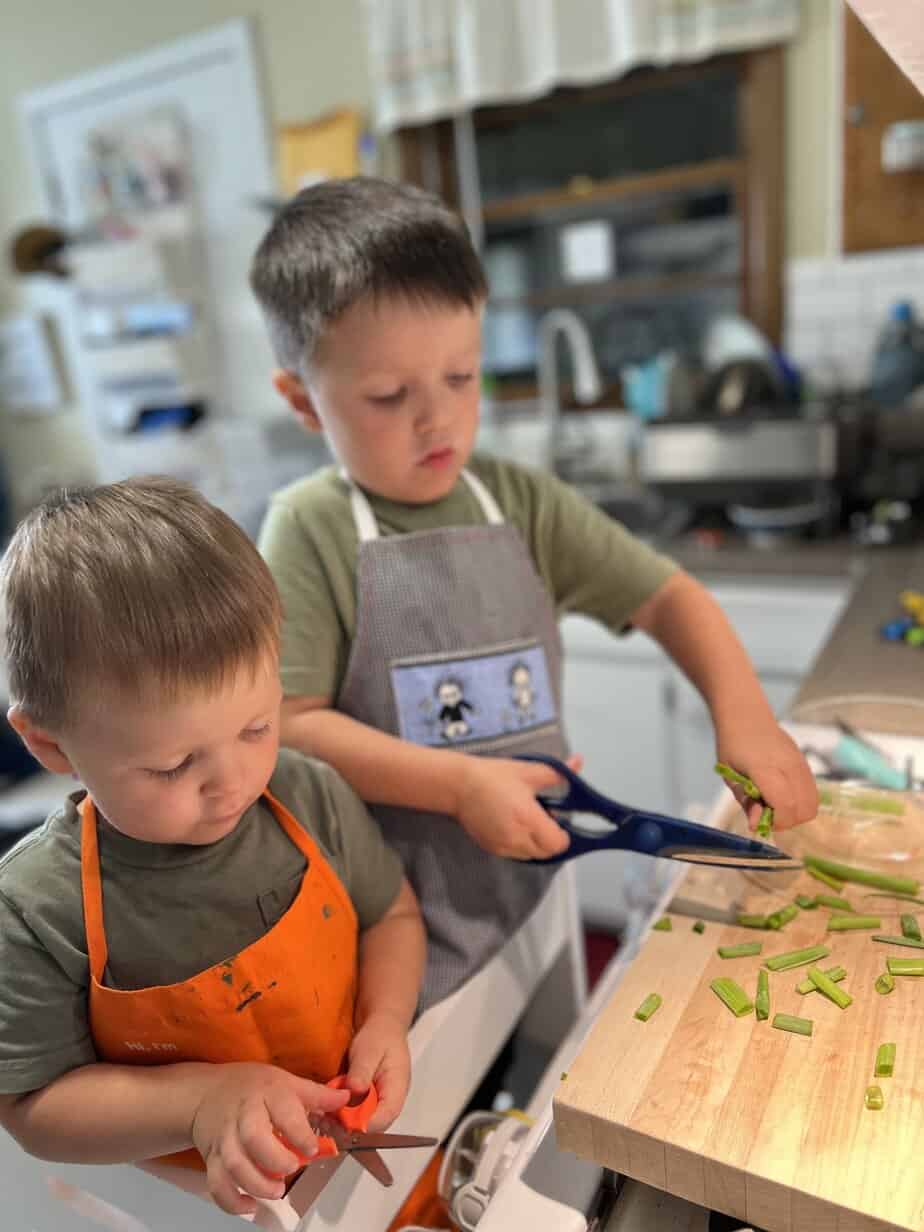
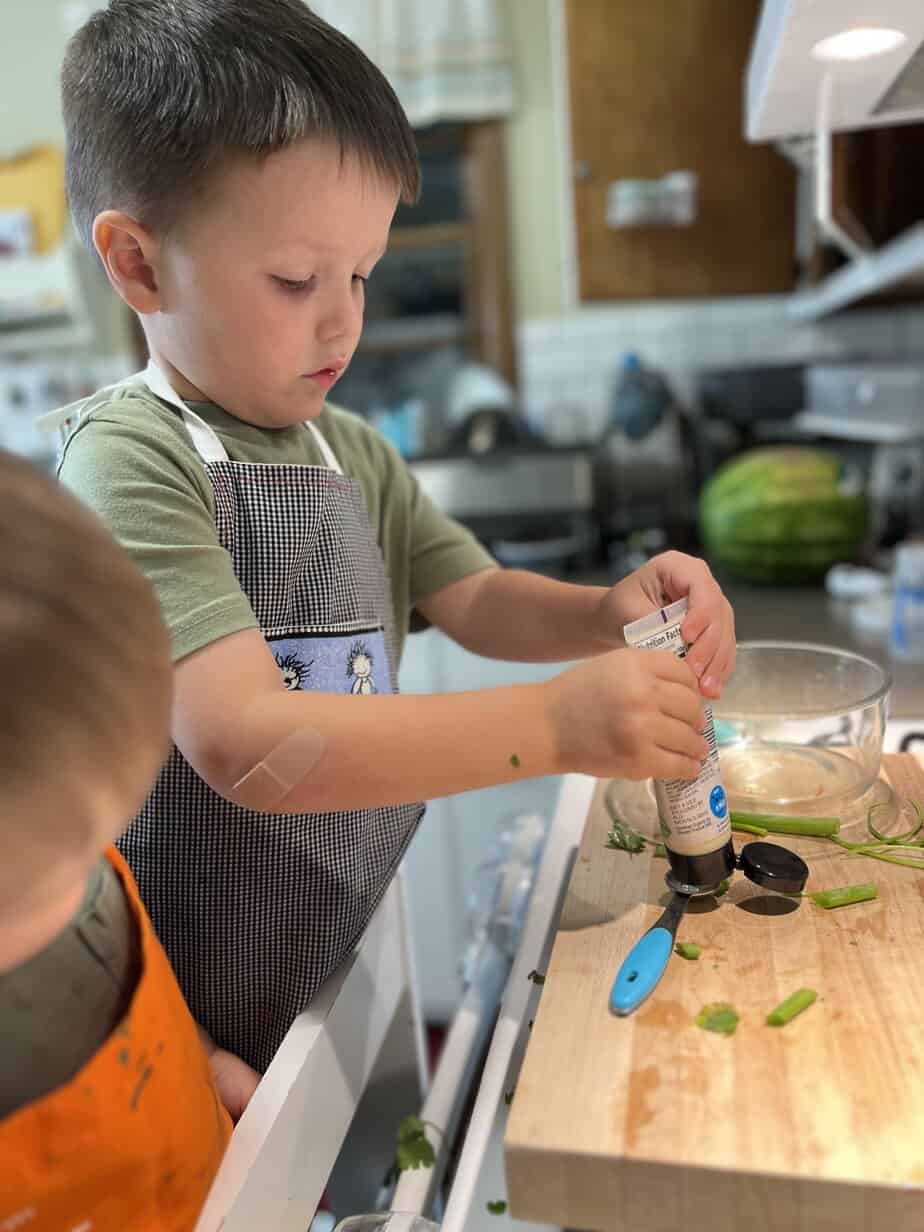
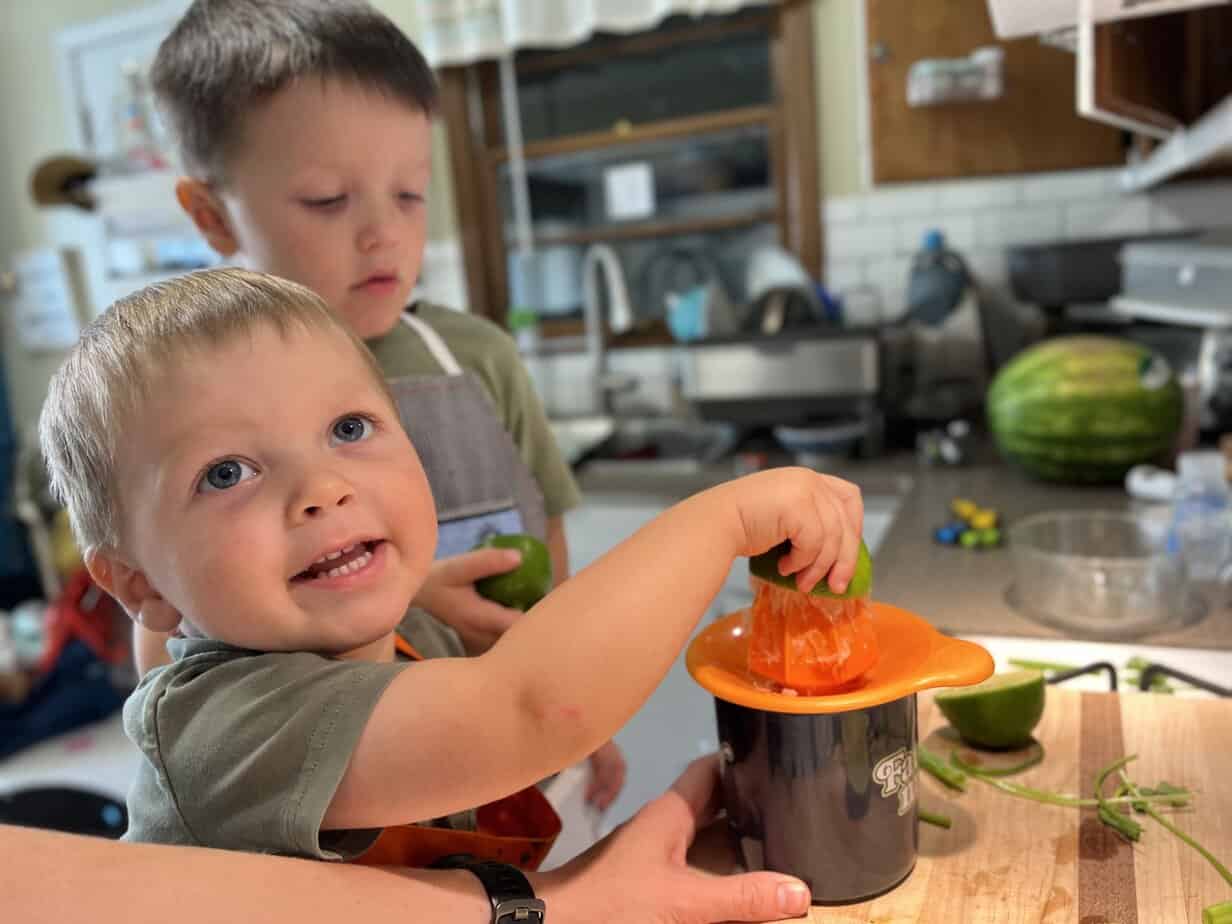
3. Child Sized Items for Independence and Routines
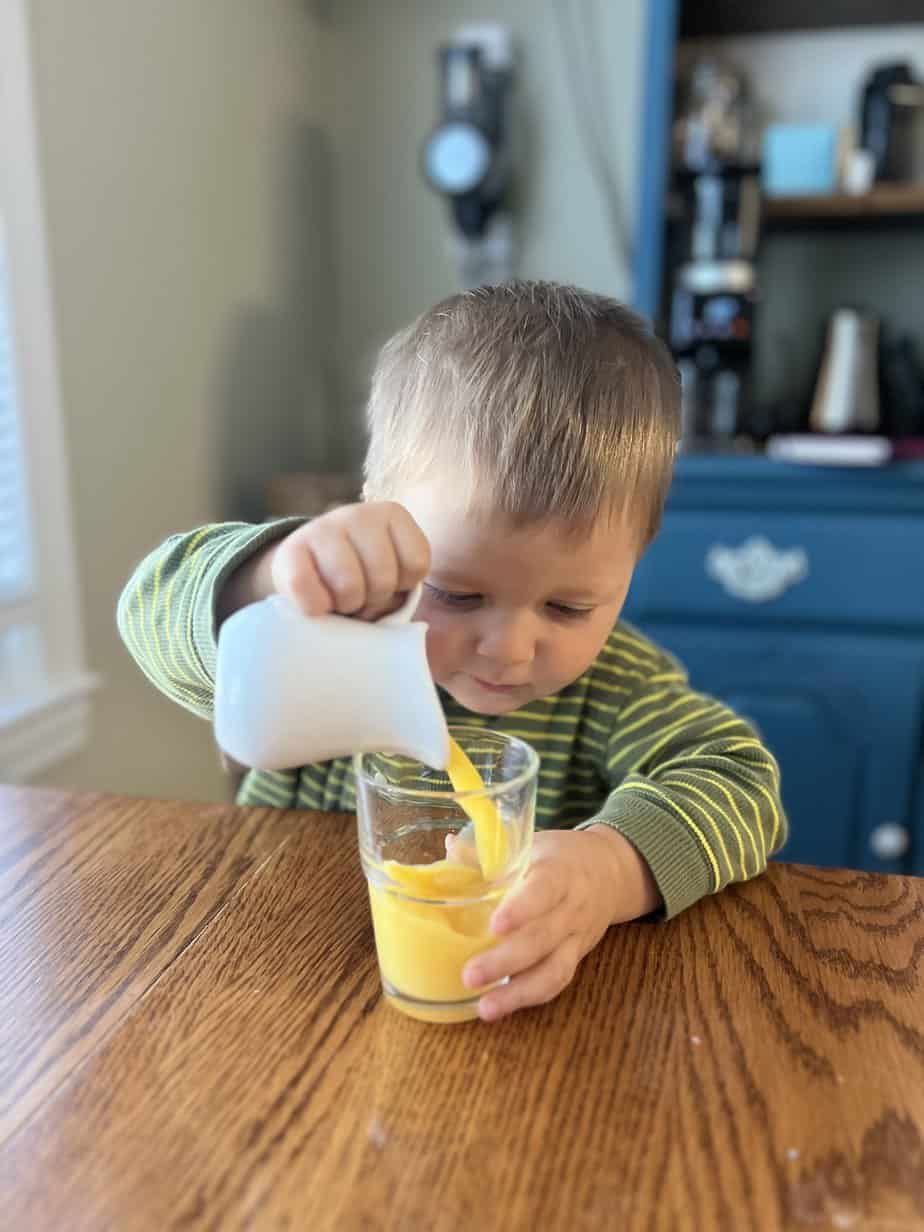
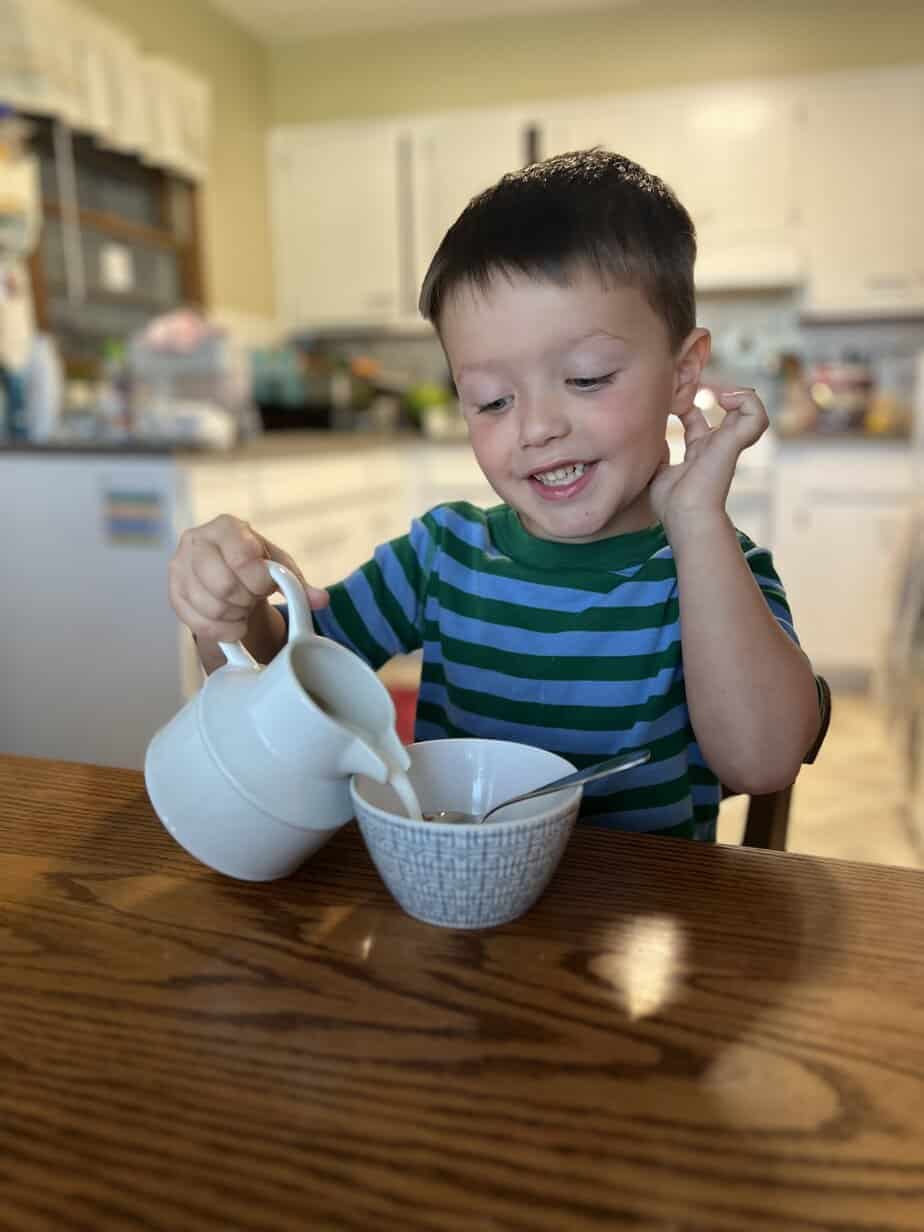
I try to allow the boys to be as independent as possible in our little kitchen. I pour orange juice into a tiny pitcher for Micah (2 years old) and he pours it into his cup each morning. It has become his morning ritual and is the first thing he asks to do. He is giddy about it! Eli loves milk and has a milk pitcher in the fridge that he can access and pour for himself and to serve his brother.
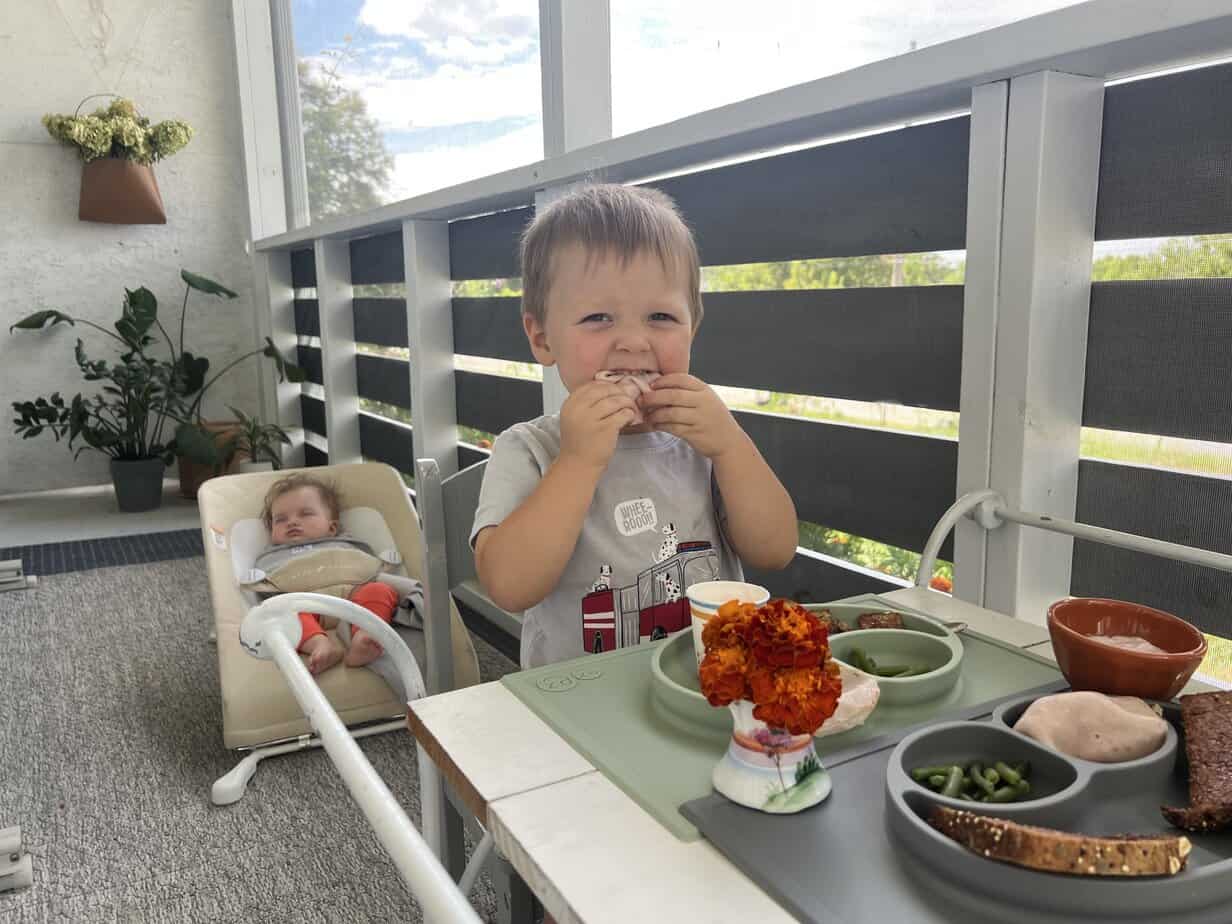
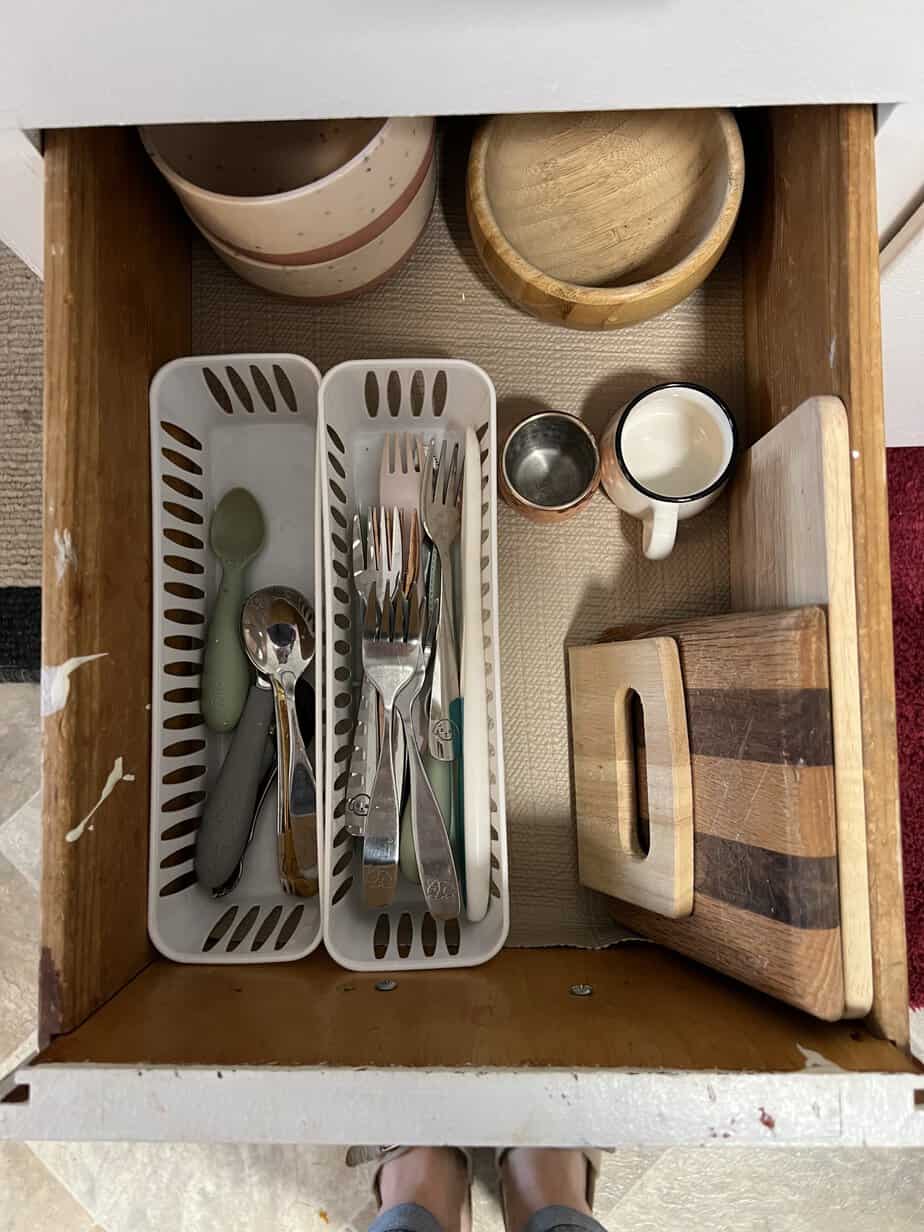
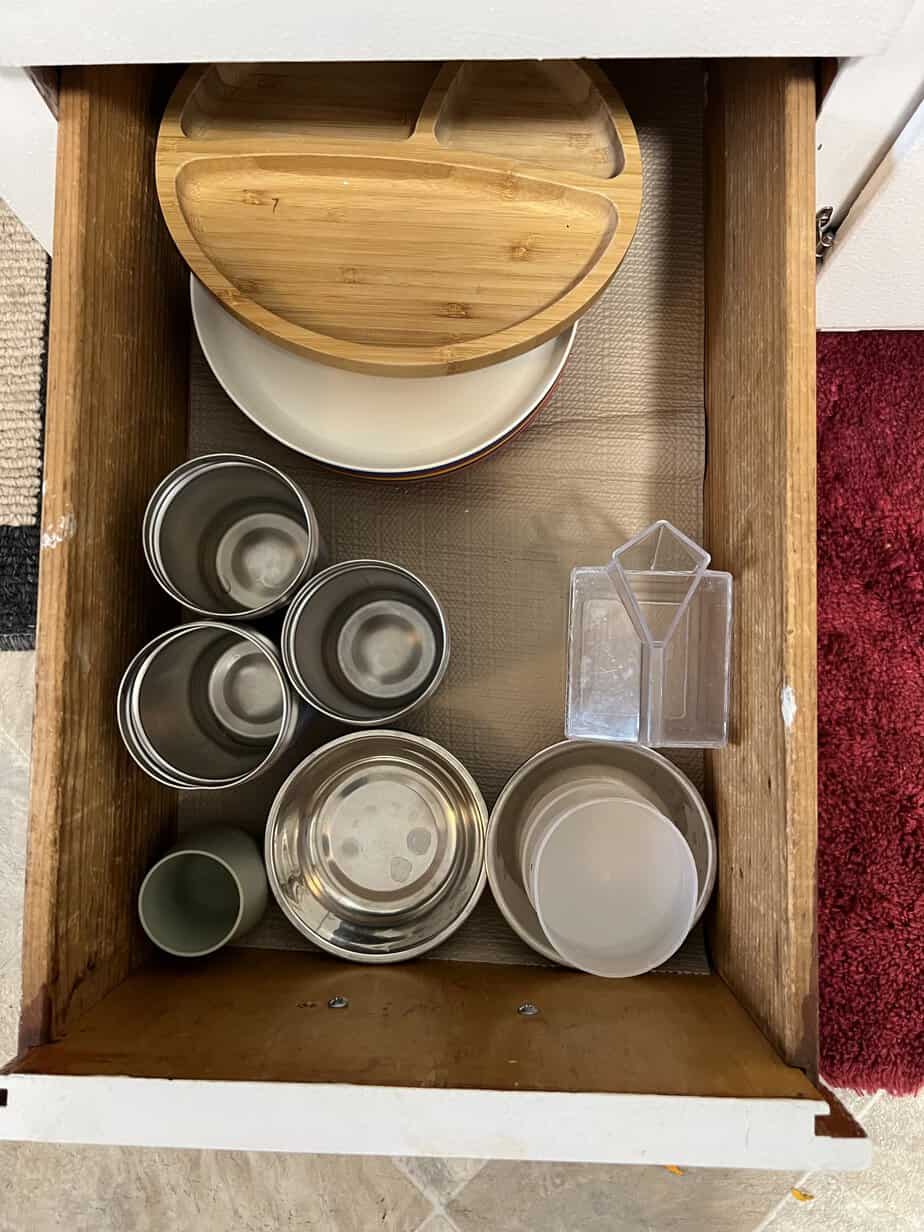
We have two drawers in the kitchen designated for kids’ dishes. One has bowls, silverware, tiny cups and cutting boards. The other has extra plates, cups, and snack bowls for things like a handful of blueberries, sauces, or apple slices. Each child has one main plate that they use and it’s washed after each meal. We use the EZPZ Happy Plates which make it easy to scoop food up with its high sides and the plate suctions to the table.
4. Child accessible drinking water
From the time our kids are about two, they are taught how to get their own water. We have a Brita filter on the counter that they get water from, which our two-year-old can barely reach without the learning tower. If they want cold water, there is a simple plastic dispenser in our fridge that we refill using the filtered water. We don’t have a fridge water dispenser.
5. Child accessible cleaning supplies and rags
Right off the kitchen, in the garage is a hanging organizer full of cleaning rags that they use when there is a spill. Spills are a regular part of life with littles and they know to jump right up and get a rag. They can use a spray bottle under the sink with supervision too.
6. Chores
I recently felt overwhelmed about dishes and how to avoid “the pile up.” I would end up with an entire days worth of dishes in the sink at 7 pm. Not feasible for a tired mom or dad at that hour!
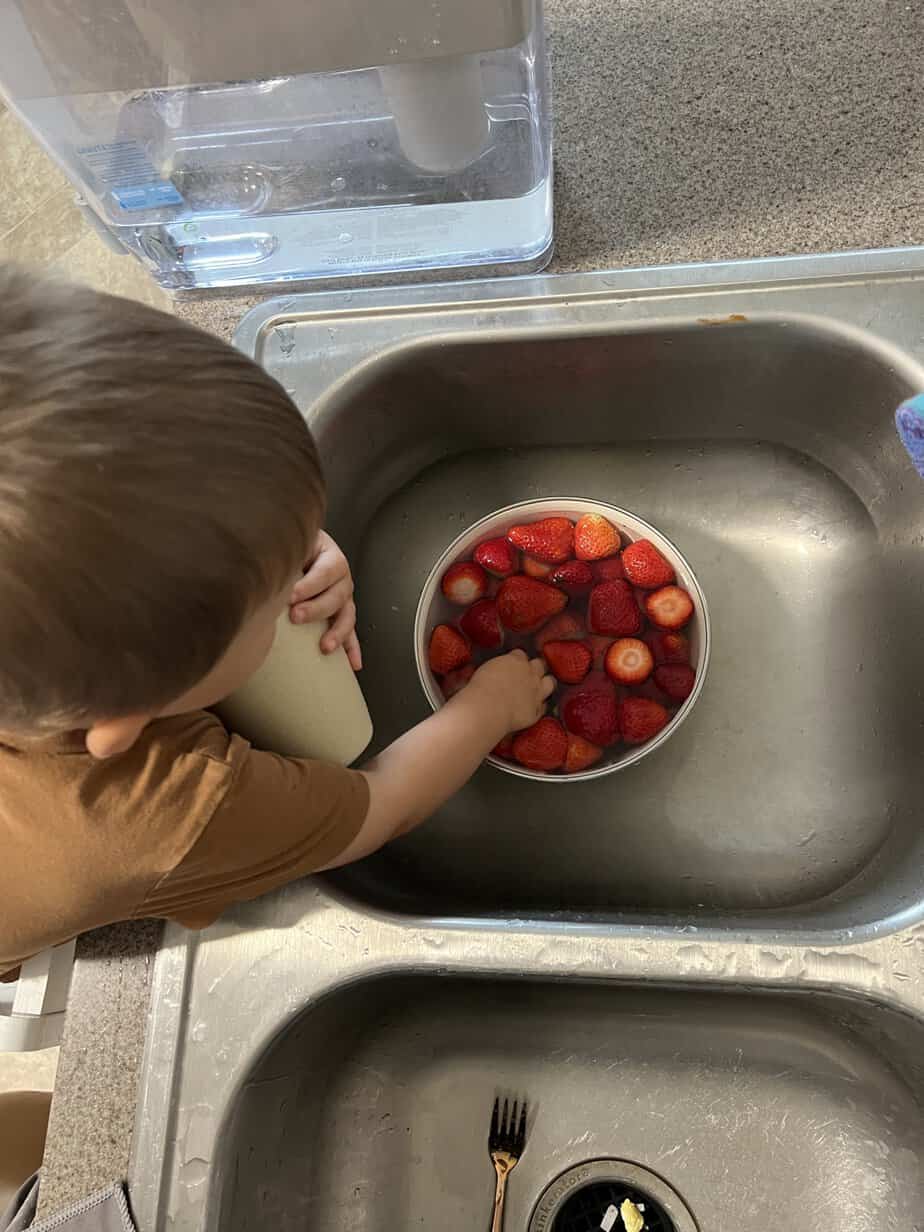
One of the topics Robby and I have recently been brainstorming is how to include the boys in more household tasks and chores. I moved the learning tower to the sink so after each meal, they can both help clear the table and carefully set the dishes in the sink. While they clear, I stand at the sink and hand wash the dishes. Skipping the dishwasher altogether is actually saving me TONS of time and mental load. Any kids’ dishes that are in the drying rack before the next meal are put in a large plastic container and the container is set on the floor. One of the boys puts the kids’ dishes away in the drawers since they are easily accessible at their level. It only takes about 2 minutes to put the dishes away and then the dish rack is empty and ready to go.
7. Eating outside when possible
Our current weekday rhythm is eating lunch on our little porch, weather permitting. We can’t get enough of the fall weather. The meals usually go better since everyone is more regulated outside listening to the birds and watching cars drive by. The boys sometimes even cut flowers for their little table.